Image



The design engineer, Peritas was contacted by Booth Transport to assist with a heavy-duty pavement solution to expand their existing container storage facility in Tasmania. The proposed facility included a new heavy-duty pavement that would be trafficked by container handling forklifts with axle loads of 80 tonnes.
Based on the geotechnical investigation, the initial pavement design was undertaken for CBR = 9%. During construction it was noted that the actual CBR was 7% and some soft spots where CBR = 2.5% were also encountered. To optimise the pavement thickness for the subgrade conditions, a geosynthetic solution was required.
Incorporating triaxial geogrids into the pavement was proposed as a readily available solution to Booth Transport to minimise downtime on site. Geofabrics and proposed a solution where pavement thickness did not need to be increased from the original design by using triaxial geogrid in the pavement. Where soft spots with CBR = 2.5% were encountered, geogrids helped to reduce the pavement thickness by approximately 40%, compared to the non-stabilised pavement thickness.
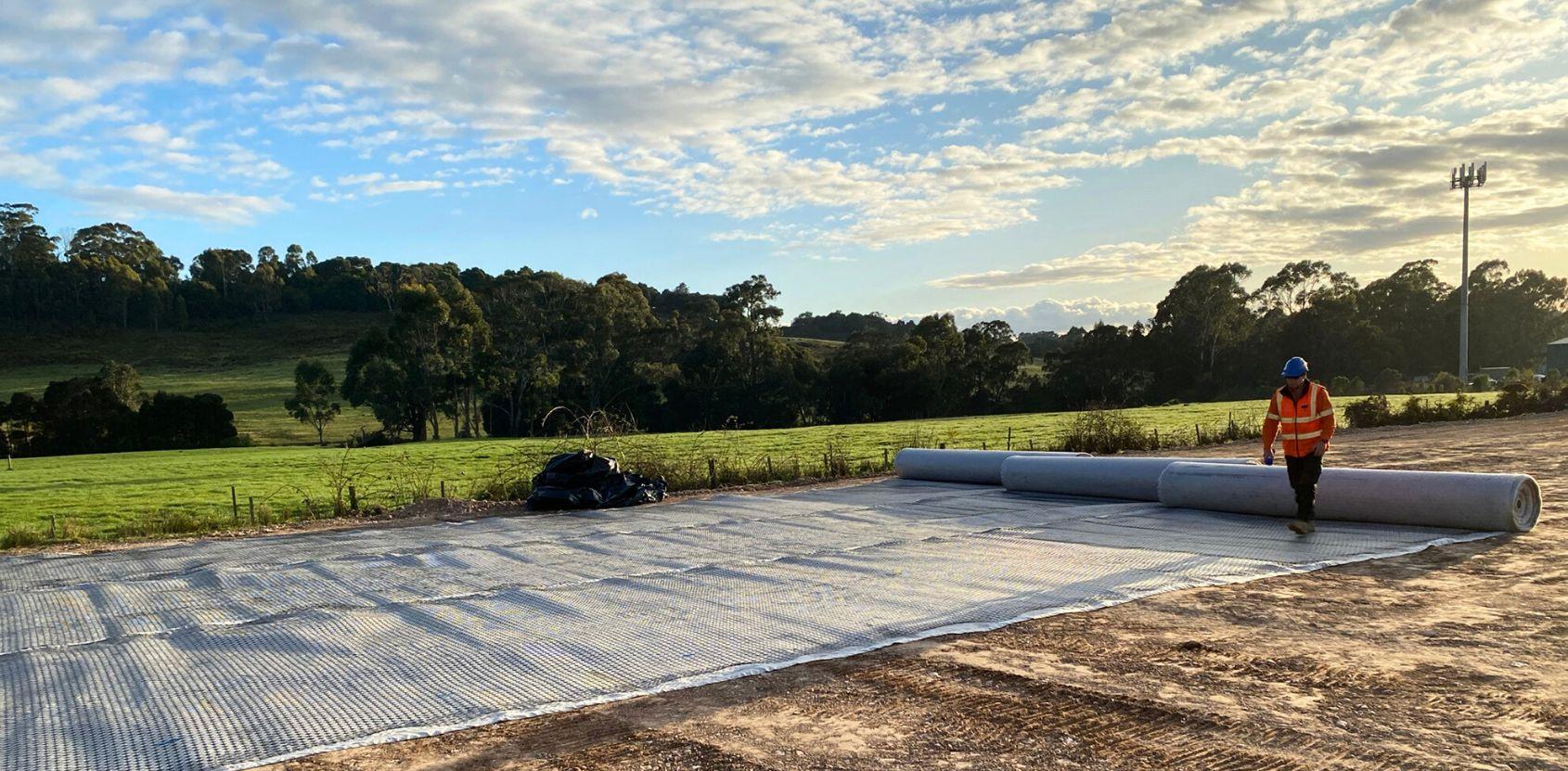
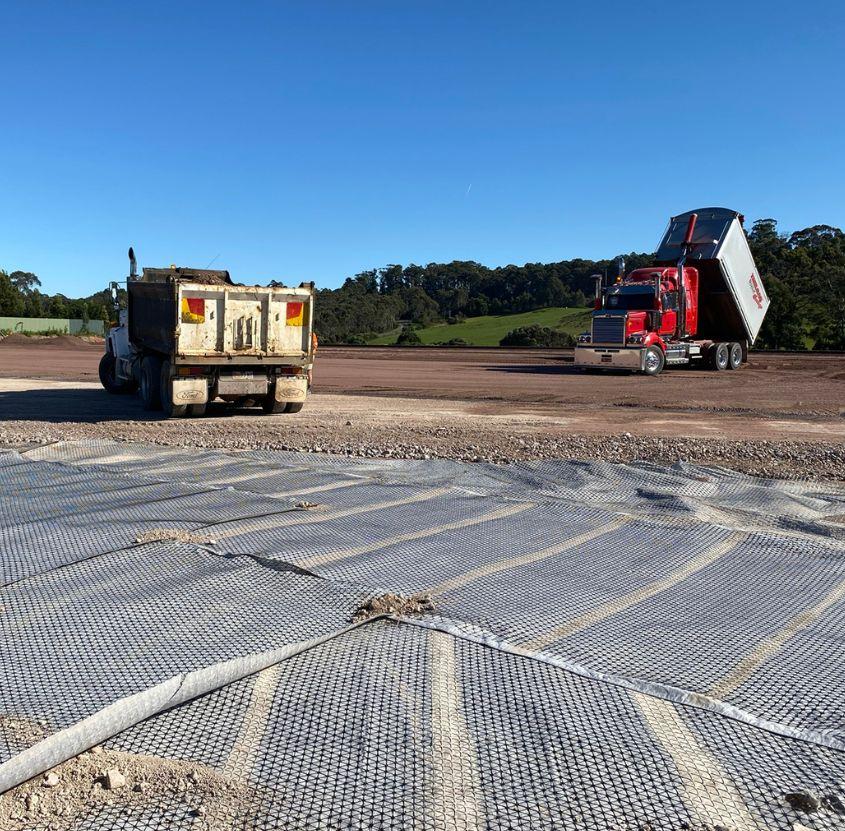
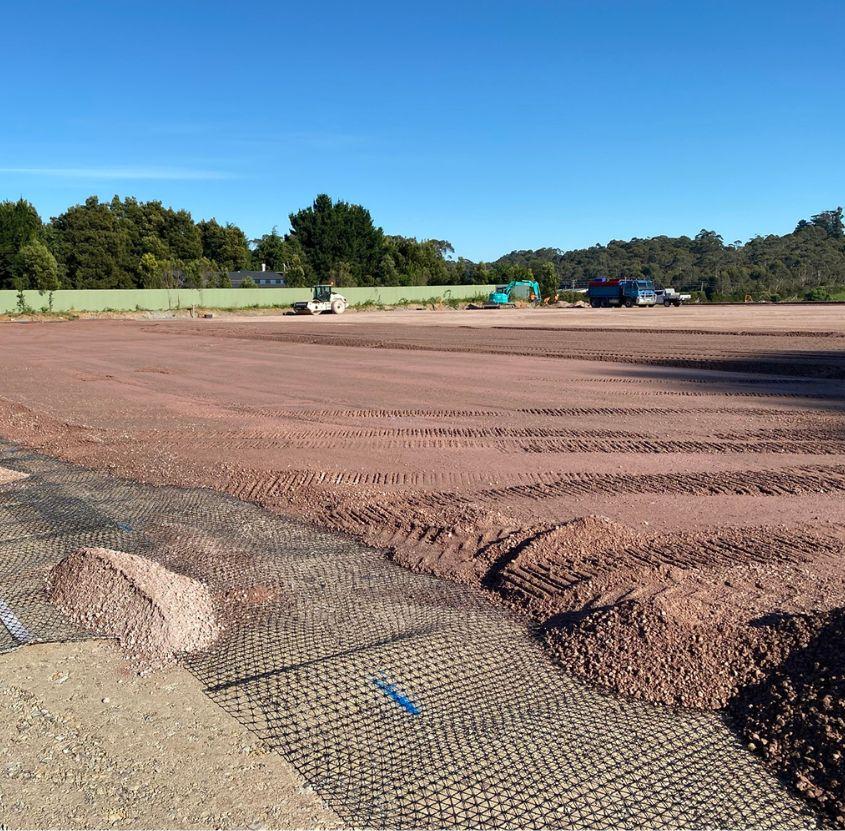
Prior to installation, the existing ground was proof rolled and prepared. Triaxial geogrid laminated to a non-woven geotextile was installed directly on the subgrade and overlap was provided according to the published installation guidelines. Following this, a 400mm layer of Class 3 subbase was constructed and tested every 200mm. The subsequent layers consisted of multiaxial geogrid and 400mm Class 3 subbase, which was also tested every 200mm with the top layer consisting of 50mm asphalt.
A total of 11,020m² of triaxial geogrid laminated with non-woven geotextile was used, with an additional 10,545m² of geogrid installed. The client was able to avoid construction delays due to weak ground conditions by incorporating triaxial geogrids into the pavement. For significantly softer areas with CBR = 2.5%, the pavement thickness was reduced by approximately 40%.
Triaxial Geogrid
DISCLAIMER - The images depicted in the photographs on this page are similar to the Geofabrics' products listed but they are not the same.