Image
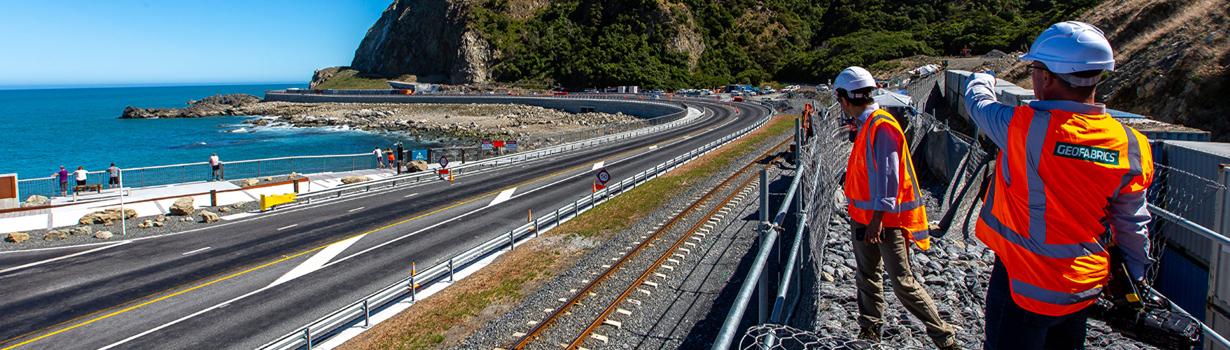


For the design of reinforced soil walls and slopes using Tensar RE500 geogrids, this program incorporates new design methods and an improved graphical interface, replacing the WinWall and TensarWallAS programs. It is intended for experienced users who have attended the Tensar Training Workshops, as well as new users who have received in-house training by Geofabrics.
Latest version is 2.17.9. Existing users should check their version and download this latest update.
This design software has been developed to design Precast Modular Block (PMB) retaining wall using Verti-Block, with either the mass gravity or geogrid reinforced soil wall options. The software includes two modes:
Analysis mode
Layout Mode
Tensar+ is a free, cloud-based geotechnical design software that allows engineers, contractors, and owners to design with geogrid in a variety of geotechnical, roadway and working platforms applications. The platform features state-of-the-art knowledge on the design of geogrid-stabilised solutions and quantification of the benefits of stabilisation in terms of cash, time and carbon. These developments are based on the concept of mechanical stabilisation, which relies on two features of stabilisation geogrids: interlock and confinement.
Use the platform to design your project, customise its specifications and see the cost-savings in real time.
Tensar+ offers a number of design modules that are suitable for:
Unpaved roads
Paved roads
Platform
The T-value approach calculates the bearing capacity of granular layers over weak subgrades, incorporating mechanical stabilisation benefits and using large triaxial tests to develop a constitutive model for finite element software. This method allows for the design of working platforms with or without stabilisation geogrids, and it is compared to the BR470 approach to evaluate the performance and cost-saving benefits of Tensar working platforms.
Foundation
Liquefaction is a concern in areas with significant seismic activity or large vibratory loadings, such as train loadings and vibratory compaction, over loosely packed saturated sands. Gravel rafts can mitigate damage to structures on liquefied soil, though their depth can be costly. The T-Value method reduces the thickness and construction time of these gravel rafts, offering significant cost savings.
Rail (Coming soon)
Tensar+ takes an innovative approach to analysis in track bed. Fundamental material research using large triaxial testing, parametric analyses using the derived numerical models, and calibration to full scale laboratory experiments are the backbone of the module. From there, a performance-based method of designing track bed, the Lees-Kelly approach has been developed. The method is an improvement over the Li-Selig approach and is at the cutting edge of performance-based design for rail track bed