Image

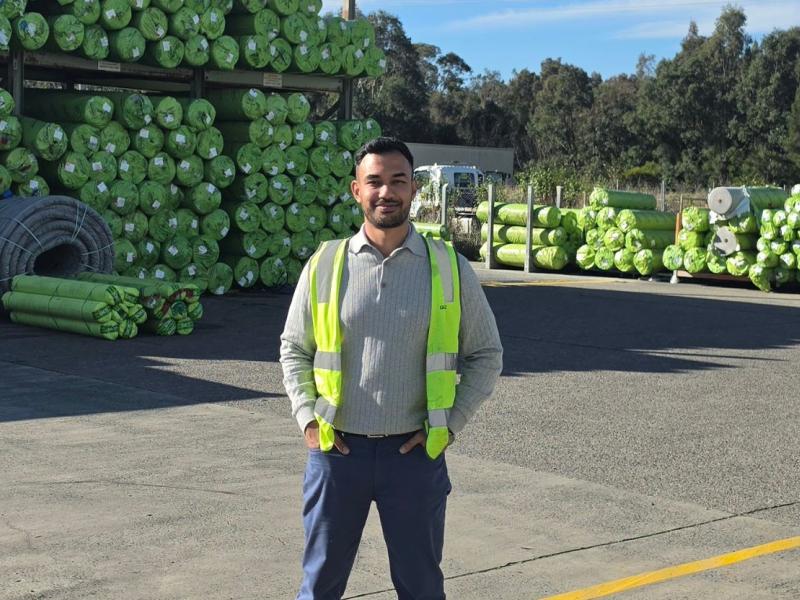
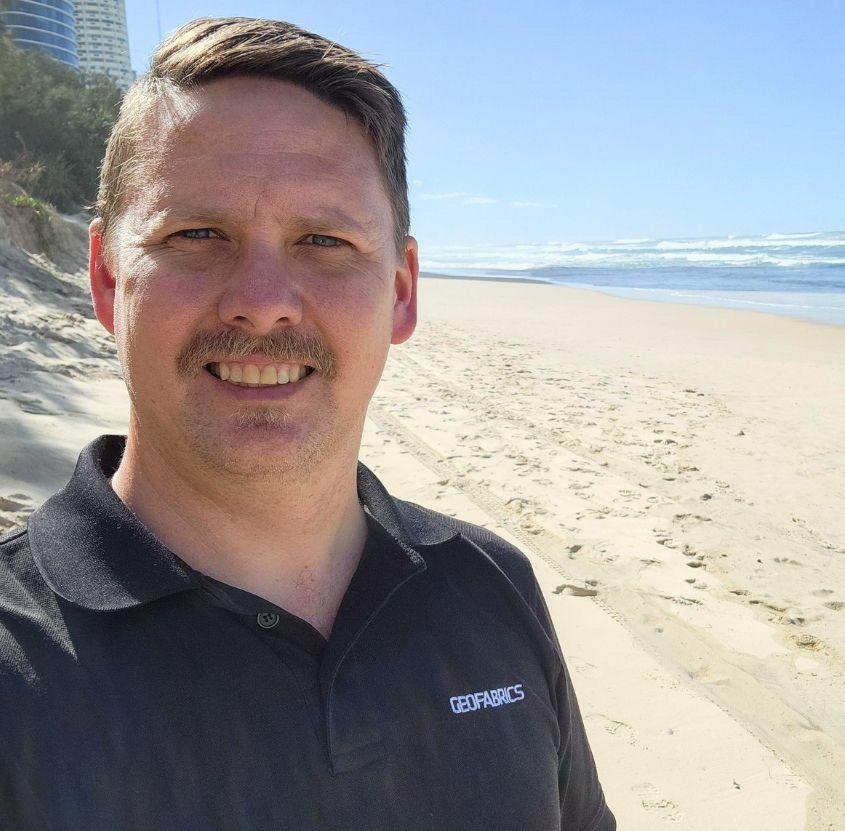
Coastal projects present unique engineering and environmental challenges, from protecting shorelines to supporting critical marine infrastructure. At Geofabrics, our National Business Development Manager for Coastal, Ben Krzewina, works closely with clients to deliver geosynthetic solutions designed for demanding coastal and marine conditions.
We sat down with Ben to discuss the key challenges facing coastal infrastructure, emerging industry trends, and how Geofabrics supports projects across Australasia.
Can you tell us a bit about your role as the Business Development Manager for Coastal?
My role centres on building relationships with engineers, consultants, contractors and clients to understand their project needs and challenges. I work closely with them to provide technical support, share product knowledge, and develop practical solutions for coastal protection and erosion control.
A key part of my role involves engaging early in the design process, educating the market on our products, exploring innovative solutions, and continually expanding my knowledge to better support the industry. I also collaborate with the wider team to deliver effective solutions from concept through to construction.
What do you enjoy most about working on coastal projects?
The variety of challenges that come with coastal projects, combined with the opportunity to develop solutions that make a real difference, is what makes this work so rewarding. Every project is different, which gives me the chance to learn, think outside the box and work alongside some great people in the industry. I also enjoy seeing a project progress from the initial design discussions through to completion, knowing that the solutions we deliver can have a lasting impact on protecting our coastlines.
What are some common challenges clients face when delivering coastal protection projects?
One of the biggest challenges is balancing a project’s technical requirements with budget constraints, environmental considerations and the long-term performance of the solution. Funding and approvals can also delay works, while site conditions, wave action and tidal movements make each application unique. Coastal environments are constantly changing, making projects difficult to budget for and even more challenging to plan, particularly as the impacts of nature and extreme weather events become increasingly unpredictable.
What is one memorable coastal project you’ve worked on?
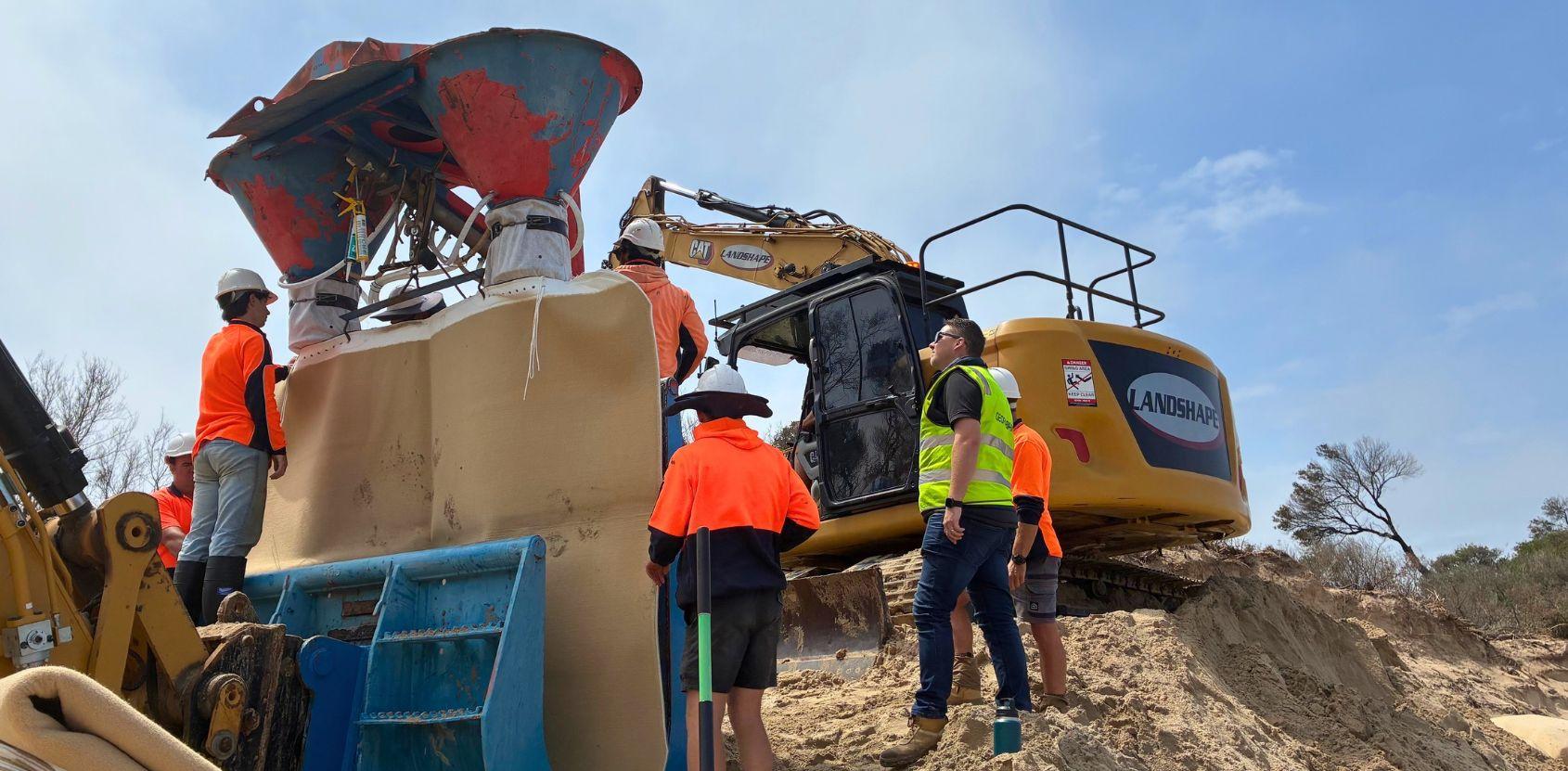
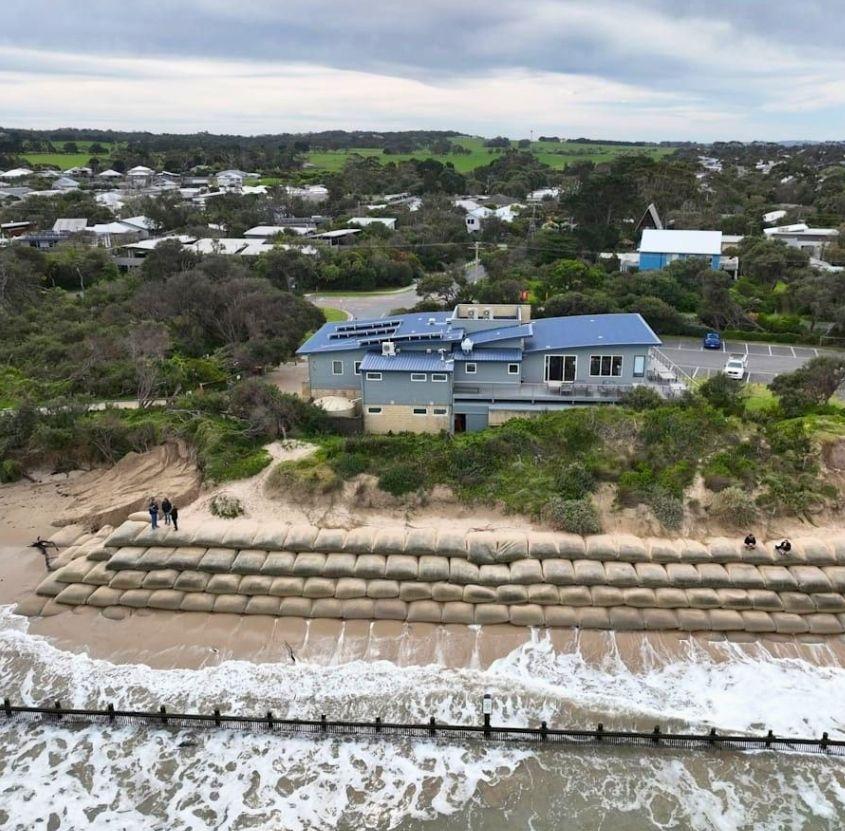
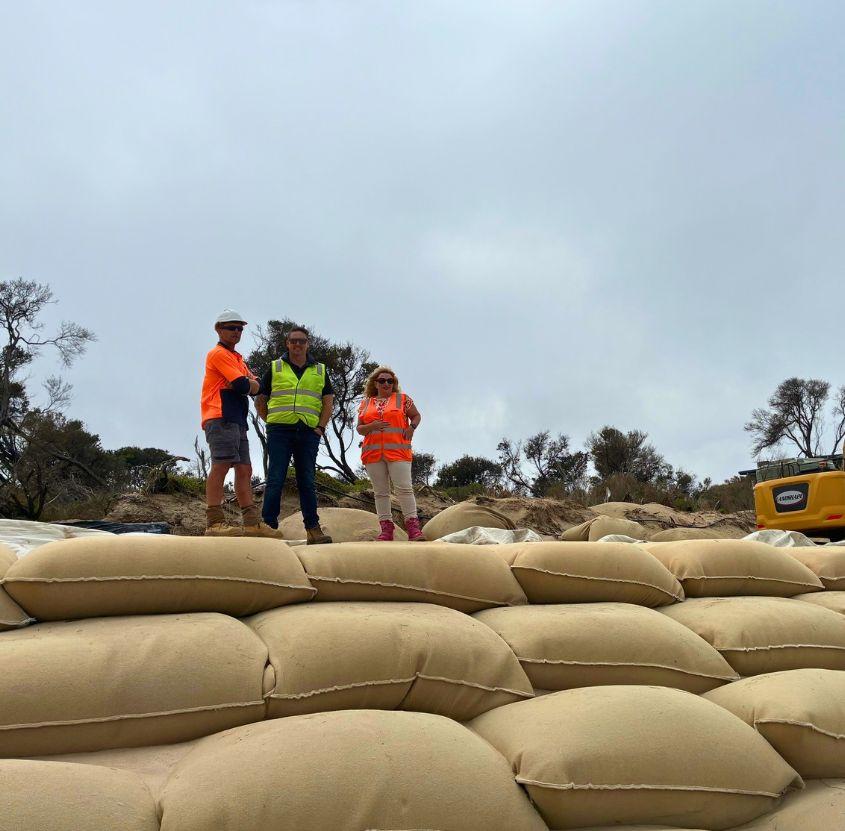
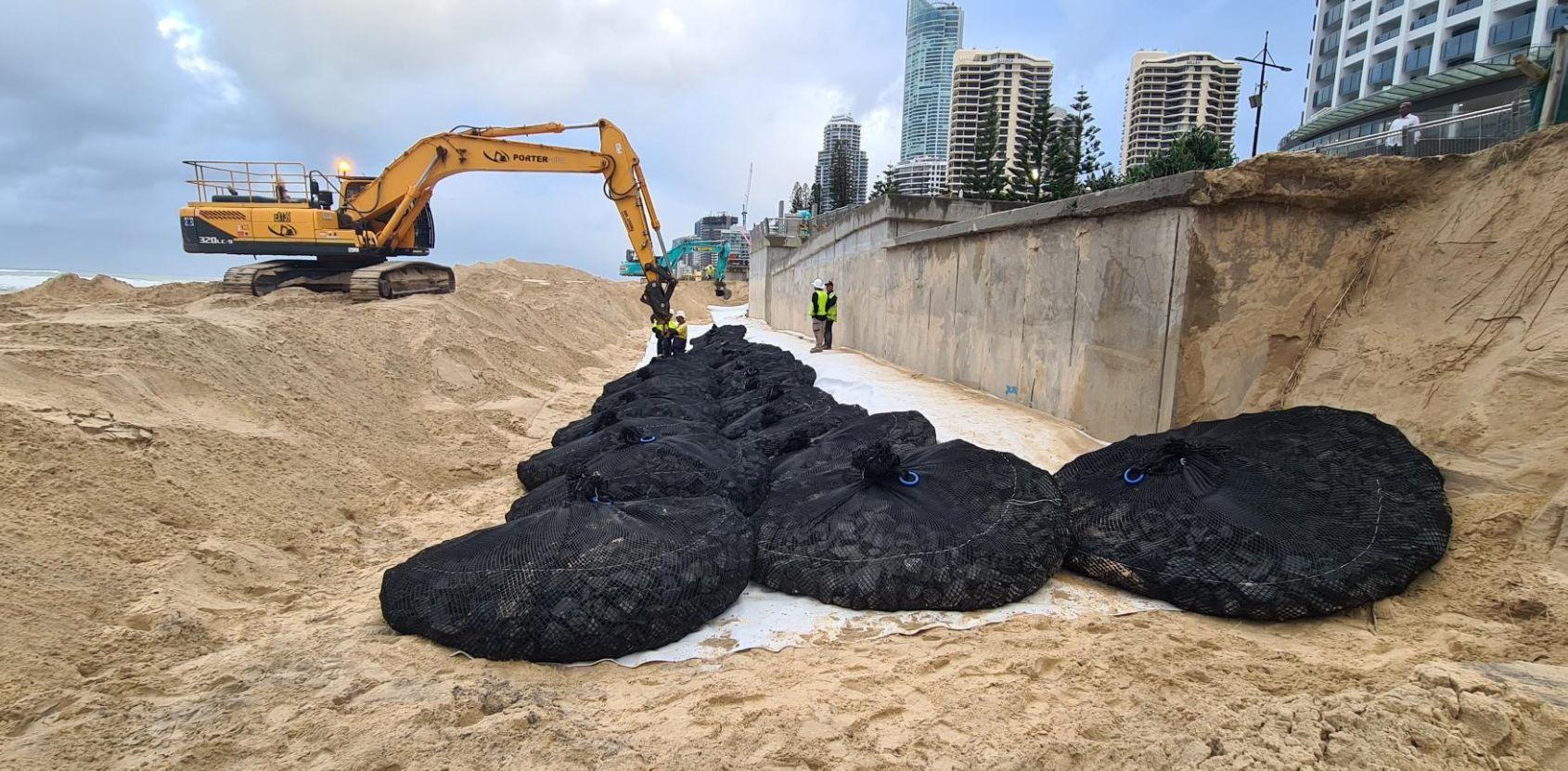
I’ve been involved in many projects, so it’s hard to pick just one, but Inverloch definitely stands out as a memorable. We were involved in extending both sides of an existing seawall, working closely with the design engineer and a local contractor who was using our Elcorock geosynthetic sand containers for the first time.
There was strong community interest, with locals following the progress closely through social and traditional media. It was great to see everyone working together to deliver a solution that strengthens the coastline and helps protect the surrounding facilities. I think the council, surf club and wider community can now breathe a little easier, knowing further erosion protection is in place, and the area can continue to be enjoyed by the public.
What advantages do geosynthetic solutions offer in coastal environments?
One of the biggest advantages of geosynthetics is their versatility and ability to adapt solutions to suit different coastal environments. Every site has its own challenges, and geosynthetics give engineers more options for managing erosion, improving stability and protecting our coastlines. Many of these solutions can be designed to work alongside natural processes, allowing vegetation to establish and the surrounding environment to recover over time. Ultimately, it’s about finding the right solution for each site and creating something that will benefit the coastline and the community for years to come.
What trends are you currently seeing across the coastal sector?
I’m seeing a growing focus on more sustainable and environmentally friendly solutions, while still ensuring the long-term performance of coastal protection works. There is also an increasing emphasis on working with natural processes, incorporating vegetation and minimising the environmental impact of construction.
While the industry is encouraging natural remediation and revegetation, correctly selected geosynthetics can provide the underlying structure and stability needed to support these processes, allowing vegetation to establish and the natural environment to recover over time.
With coastal erosion, rising sea levels and extreme weather events continuing to challenge our coastlines, there is an increasing need to look beyond short-term fixes and develop solutions that work alongside nature while providing long-term resilience.
What advice would you give to organisations planning a coastal protection project?
It’s important to get the right people involved early in the process and take the time to understand the site and its challenges. Every coastal environment is different, and what works in one location may not be suitable for another. Look beyond the immediate problem and consider the long-term performance of the solution, its environmental impacts and how the design can work with natural processes. I’d encourage organisations to keep an open mind when it comes to materials and design options, as there are many innovative solutions available that provide effective protection while supporting natural environmental recovery overtime.
Our team can help you choose geosynthetic solutions that deliver better outcomes for your site and project requirements. Contact us to discuss your next project.